US Dollars

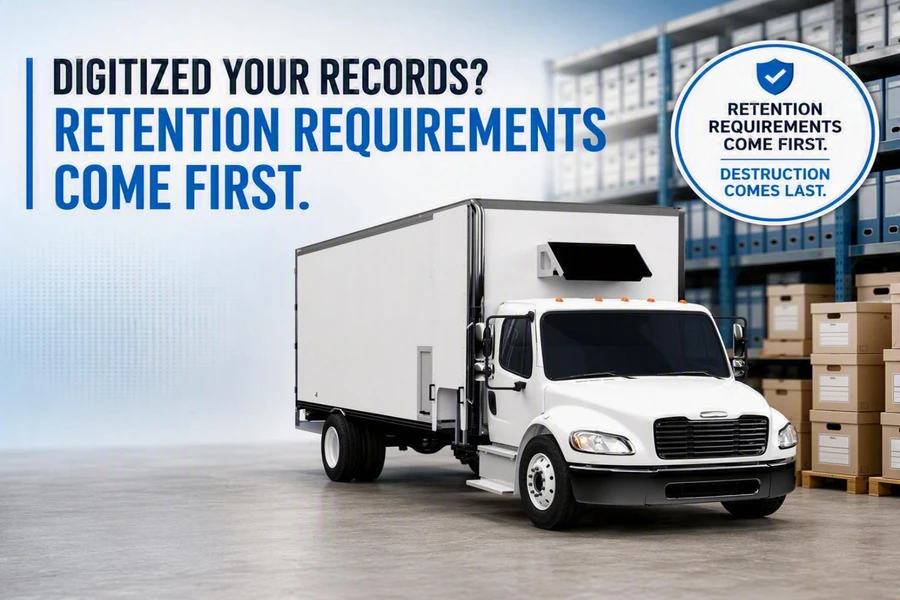
You have scanned the books, preserved the information, and built the digital archive.
So why are you still paying to store the physical collection?
After digitization, many libraries, universities, government agencies, publishers, records management providers, and businesses are left with thousands of books, manuals, publications, and archived records that no longer serve their original purpose.
The information may be accessible digitally, but the physical materials continue to:
- Occupy valuable library, office, or warehouse space
- Generate ongoing storage expenses
- Require inventory and administrative oversight
- Create security risks when sensitive information is involved
- Delay the full return on the digitization investment
Digitization preserves the information. Secure destruction helps organizations realize the operational, financial, and environmental value of the project.
Digitization Is Not Complete When the Scanning Ends
Organizations digitize physical collections to make information easier to access, reduce dependence on paper records, preserve important content, and modernize information management.
However, digitization only solves the information-access challenge. It does not automatically eliminate the cost and complexity of managing the physical materials left behind.
If books and archives continue to fill shelves, storage rooms, warehouses, or off-site facilities, the organization may still be carrying many of the same costs and burdens that the digitization project was intended to reduce.
A complete digitization strategy must answer two questions:
- How will the information be preserved and accessed?
- How will the physical collection be securely and responsibly retired?
Addressing both allows organizations to move beyond digital conversion and capture the full value of their investment.
Stop Paying to Store Materials You No Longer Need
Physical archives require more than shelf space.
They can consume high-value real estate, create recurring off-site storage fees, require controlled storage environments, and demand ongoing employee time for tracking, retrieving, securing, and managing materials. Once digitized, physical records can be ignored and far outlive their retention period.
When an organization no longer needs the physical copies, continuing to store them can divert money and space away from more productive priorities.
Secure archive reduction can help organizations:
- Reduce or eliminate ongoing storage expenses
- Reclaim space for higher-value activities
- Simplify records and inventory management
- Reduce the burden of maintaining retired collections
- Support facility consolidation or modernization
- Complete the transition from physical storage to digital access
The value is not simply in destroying books and records. The value is in eliminating the costs, risks, and operational burdens associated with keeping them.
Reclaim Space That Can Serve a Better Purpose
Space recovered through archive reduction can be repurposed to support current organizational needs.
A library may create more room for collaborative learning areas. A university may convert archive space into research or program facilities. A business may reduce leased storage requirements. A records management facility may free up space for new storage contracts.
The result is more than an empty shelf.
Reclaimed space can help an organization improve facility utilization, reduce overhead, and create room for activities that deliver greater value.
For many organizations, eliminating unnecessary physical collections is one of the most direct ways to begin realizing the return on a digitization investment.
Why Bound Books Require the Right Destruction Solution
Books cannot always be processed as easily as loose paper.
Hardcover and softcover books, manuals, journals, bound records, and archived publications may contain dense covers, bindings, adhesives, and multiple material layers. These characteristics can create bottlenecks, increase preparation time, and reduce throughput when the equipment is not designed for the application.
Large projects amplify these challenges.
Manually removing covers, separating materials, or preparing each book individually can add significant labor and extend project timelines. Conventional document destruction equipment may also struggle to process bound materials consistently. Shred-Tech's MDS lineup offers four performance levels, from the MDS-1S through the heavy-duty MDS-4, giving operators the power and capacity to process demanding bound-book and archive projects more efficiently.
Purpose-built shredding equipment helps reduce these obstacles by supporting:
- Efficient processing of bound materials
- Less labor-intensive material preparation
- More consistent throughput
- Faster project completion
- Scalable processing for larger archive reductions
The right equipment does not simply destroy the material. It helps make the entire project more manageable.
Turn a Large Archive into a Manageable Project
Archive reduction projects can involve far more than a few bookcases.
A university may need to retire decades of bound records. A publisher may have excess or obsolete inventory. A library may be consolidating collections across multiple locations. A digitization provider may need to manage physical materials after completing a major scanning contract.
Without the right processing strategy, thousands of books can quickly become a logistical and operational challenge.
High-volume destruction capabilities help organizations and service providers:
- Process more material in less time
- Reduce handling and manual preparation
- Maintain controlled destruction workflows
- Adapt capacity to project requirements
- Avoid costly project delays
- Complete archive reductions more efficiently
This creates a clearer and faster path from physical storage to digital access. As a records manager, you do not have to manage the destruction stage alone. NAID AAA Certified service providers can help plan and execute an authorized, secure archive-reduction project. Search the i-SIGMA Service Provider Locator.
Bring Secure Destruction Directly to the Collection
Transporting large volumes of books and archives can add cost, handling, coordination, and risk to a project.
For materials containing confidential, proprietary, or regulated information, transportation may also add another step to the chain of custody and add risk.
On-site destruction helps simplify the process by bringing the solution directly to the material.
For demanding purge jobs, the Shred-Tech MDS-4 brings high-capacity destruction directly to the collection. With throughput of up to 18,000 lbs. per hour, payload capacity of up to 14,000 lbs., and the largest cutting chamber in the MDS lineup, it is built to process high volumes of bound books, archived records, manuals, printed materials, and other products with fewer unloads and less downtime. This can help organizations:
- Reduce unnecessary material transportation
- Limit the number of times materials are handled
- Maintain greater control over sensitive information
- Support chain-of-custody procedures where applicable
- Complete archive reduction projects at the customer’s location
For shredding companies and records management providers, a purge truck like the MDS-4 can also expand service capabilities. Providers can support customers that need help retiring physical collections after digitization, without requiring those customers to coordinate the movement of large volumes of bound materials.
This creates an opportunity to solve a growing customer problem while adding a specialized service offering.
Choose the Right Workflow for the Project
Not every archive reduction project requires the same approach.
Mobile destruction may be appropriate when materials must remain on-site, transportation is impractical, or tighter material control is required.
Plant-based shredding systems may be better suited to centralized operations that process large volumes of books, records, and printed materials on an ongoing basis.
Shred-Tech offers both mobile and plant-based options, allowing organizations and service providers to select a solution based on:
- Material volume
- Processing location
- Throughput requirements
- Site logistics
- Security considerations
- Ongoing or project-based demand
The goal is not to force every application into the same process. It is to identify the destruction workflow that delivers the best combination of security, efficiency, and capacity.
Protect Information Beyond the Digital Conversion
Digitization does not automatically protect the information contained in the original material.
Retired books, printed records, manuals, and archived publications may still contain confidential, proprietary, personally identifiable, or otherwise sensitive information. Leaving these materials in storage can extend the period during which the information must be controlled and protected.
A structured destruction process can help organizations:
- Reduce exposure associated with retired physical records
- Maintain documented handling procedures
- Support chain-of-custody requirements
- Demonstrate responsible information management
- Meet internal security and compliance requirements
- Provide greater accountability throughout the project
Requirements vary by organization and application, but the objective remains consistent: protect the information until the physical material has been securely destroyed.
Recover Resources Instead of Creating More Waste
Retiring a physical collection does not have to mean sending it to landfill.
Once books and paper-based materials have been securely destroyed, the resulting material may be directed into recyclable fiber streams where appropriate. This gives organizations an opportunity to align archive reduction with broader sustainability and waste-diversion objectives.
A resource recovery approach can help organizations:
- Divert paper-based materials from landfill
- Recover recyclable fiber
- Support internal sustainability commitments
- Demonstrate responsible end-of-life material management
- Connect modernization initiatives with environmental priorities
This changes the conversation from disposing of an old collection to responsibly recovering value from materials that have reached the end of their useful life.
Realize the Full Value of Digitization
The goal of digitization is not simply to create digital copies.
It is to improve how information is accessed, reduce the cost and burden of physical storage, protect valuable content, and enable organizations to use space and resources more effectively.
Those outcomes remain incomplete when the physical collection is still consuming space, generating expenses, and requiring management.
Securely retiring books and archived materials can help organizations:
- Reclaim valuable space
- Reduce recurring storage costs
- Simplify archive management
- Protect sensitive information
- Support sustainability objectives
- Complete projects faster
- Capture more value from digitization investments
The strongest digitization plans account for the full lifecycle of the material, from scanning and preservation through secure destruction and resource recovery.
Ready to Reclaim Some Space?
If digitization is complete but the books are still filling your shelves, storage rooms, or warehouses, the project is not delivering its full value yet.
Shred-Tech provides purpose-built mobile and plant-based destruction solutions for bound books, archived records, manuals, publications, and other printed materials. From the mobile MDS-4 to high-capacity stationary systems, Shred-Tech can help you develop a secure and efficient approach based on your material volumes, operating requirements, and project goals.
Ask Shred-Tech how we can help you reclaim valuable space, reduce storage burdens, protect sensitive information, recover recyclable materials, and complete the final step of your digitization project.