US Dollars

Aluminum remains one of the most important revenue streams in the scrap industry, but as global demand for secondary metals increases, the gap between average processors and top-performing recyclers continues to widen.
Today's market is rewarding recyclers that can deliver cleaner, more precisely prepared aluminum feedstock. Smelters and secondary manufacturers are facing rising energy costs, tighter quality specifications, and increasing pressure to maximize furnace efficiency. As a result, scrap quality is becoming just as important as scrap volume.
For recyclers, this creates both an opportunity and a challenge: recovering more aluminum isn't necessarily about processing more material it's about extracting more value from every ton that enters the yard.
Aluminum Demand Continues to Drive Opportunity
Aluminum remains one of the most recycled and reusable industrial materials in the world. Unlike many commodities, it can be recycled repeatedly with little degradation in material properties. According to the Aluminum Association, producing aluminum from recycled scrap requires approximately 95% less energy than producing primary aluminum from bauxite ore.
At the same time, sectors such as automotive manufacturing, packaging, construction, and infrastructure continue to increase their use of aluminum due to its lightweight properties and corrosion resistance.
For recyclers, strong demand creates opportunity—but only if material is recovered and prepared efficiently.
Where Recyclers Lose Value
Many scrap processors focus heavily on commodity pricing, yet some of the largest profit leaks occur inside the operation itself.
Common sources of lost value include:
- Oversized feedstock that reduces transportation efficiency
- Incomplete liberation of mixed materials
- Ferrous contamination within non-ferrous streams
- Poor classification of mixed scrap
- Low recovery rates from downstream separation systems
Every one of these factors can directly impact the final value of the material sold.
A truck hauling loosely prepared aluminum may transport significantly fewer pounds than one hauling properly sized and densified material. In many operations, transportation inefficiencies quietly erode margins long before material reaches a buyer.
Why Liberation Matters
One of the most important and often overlooked drivers of aluminum recovery is liberation.
Liberation is the process of separating aluminum from attached materials such as steel, plastics, rubber, copper, insulation, and other non-metallic contaminants. Without proper liberation, downstream separation systems cannot operate at peak efficiency.
This is where recyclers often leave money on the table.
Eddy current separators, density separation systems, optical sorters, and sensor-based sorting technologies all rely on individual materials being sufficiently liberated before entering the separation stage. When materials remain attached or excessively oversized, recovery rates decline and valuable aluminum can report into lower-value fractions or outright residual waste streams.
Simply put:
The better the liberation, the greater the downstream recovery potential.
The Importance of Zorba Recovery
As mixed non-ferrous recycling continues to evolve, Zorba has become an increasingly important revenue stream for many processors.
Produced after ferrous metals are removed from shredded scrap, Zorba is a mixture of non-ferrous metals that typically contains aluminum along with copper, brass, zinc, stainless steel, and other valuable materials.
Many recycling operations stop at producing Zorba and sell the material into downstream markets. However, additional value often exists beyond that point.
Processors capable of achieving greater liberation upstream give downstream sorting systems a better opportunity to separate aluminum-rich fractions from higher-value metals. As recovery technologies advance, the ability to generate cleaner and more concentrated material streams is becoming a competitive advantage.
The reality is that profitability is increasingly tied to how much value can be extracted after shredding—not simply how much material can be processed.
Clean Feedstock Matters to Smelters
Secondary smelters and aluminum consumers purchase feedstock for one reason: to efficiently produce new aluminum products.
Contaminated material creates operational challenges including:
- Increased melt loss
- Greater slag generation
- Longer furnace residence times
- Higher energy consumption
- Lower overall recovery
Clean, properly sized aluminum melts faster, processes more efficiently, and improves metal yield.
For recyclers, that translates into stronger market acceptance and greater potential value.
Building Recovery Around the Entire Process
Successful aluminum recycling is rarely the result of a single machine. It's the outcome of a complete material recovery strategy.
Leading recyclers are evaluating:
- Material sizing strategies
- Liberation performance
- Ferrous removal efficiency
- Downstream separation effectiveness
- Transportation density and logistics
- Final product quality
Each stage influences overall recovery rates and operating profitability.
How Shred-Tech Fits Into the Solution
Shred-Tech helps recyclers improve material preparation at one of the most critical points in the process: shredding and liberation.
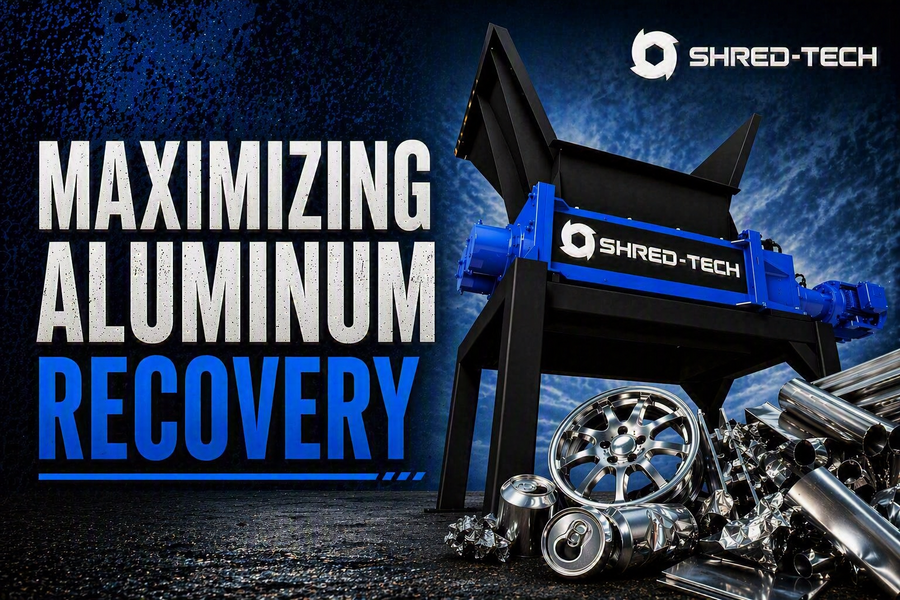
Our systems are designed to process aluminum wheels, cast aluminum, extrusions, sheet material, wire, and mixed scrap streams while supporting the level of material liberation needed for effective downstream recovery.
Whether you're building a new processing line or optimizing an existing operation, Shred-Tech works alongside recyclers to evaluate material streams, processing goals, and overall system requirements.
Because maximizing aluminum value isn't just about shredding material—it's about creating the conditions for everything downstream to perform better.
Recover More Value from Every Ton
The recyclers achieving the strongest returns in today's market aren't simply moving more material.
They're reducing transport costs, improving liberation, increasing downstream recovery, minimizing contamination, and producing cleaner products that buyers prefer.
In an industry where margins are won and lost through processing efficiency, every additional percentage point of recovery matters.
Shred-Tech helps recyclers improve material liberation and prepare aluminum streams for more effective downstream recovery, giving processors a stronger foundation for maximizing the value of every ton they handle.